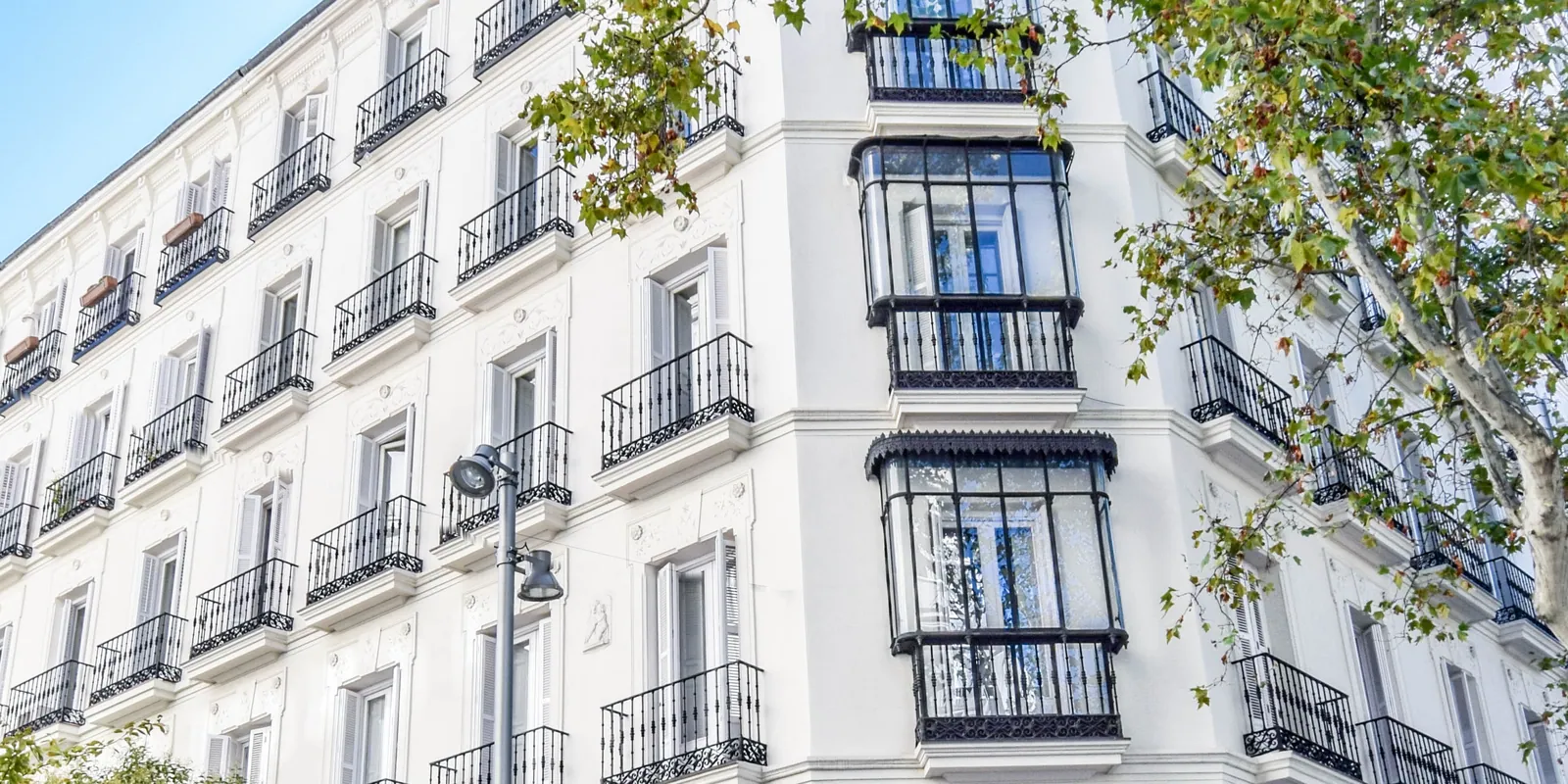
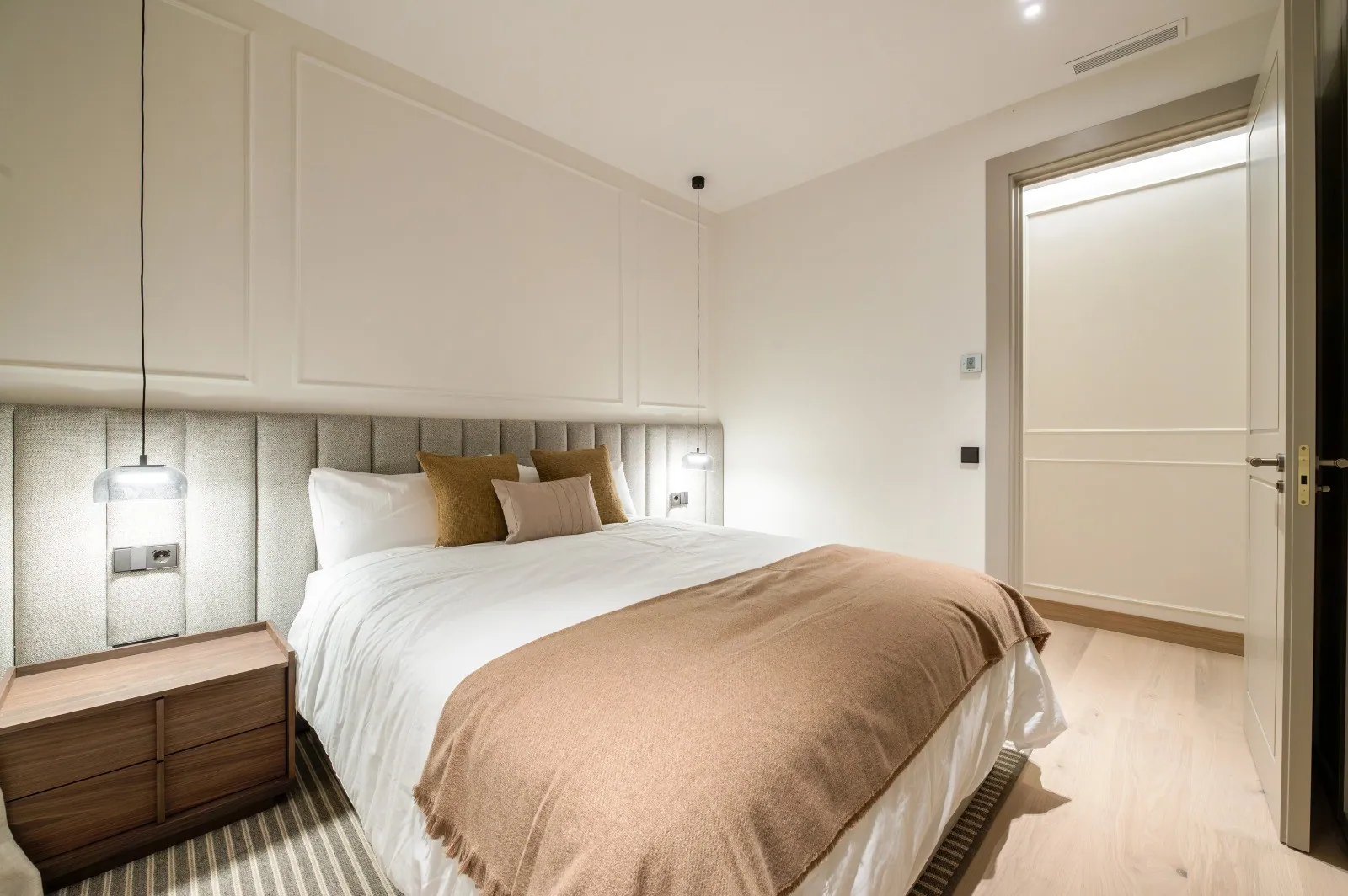
What buying a home in Madrid costs, beyond the price.
On top of the price come a tax, the notary, the Land Registry and the gestoría: a sum that never appears in the listing and is best set aside from the outset.

In this article5 sections
When people talk about buying a house, they talk about the price. Naturally: it is the big number, the one that gets negotiated. But the price of a home is not what it costs to buy it. To that figure you have to add a tax, the notary’s, Land Registry and gestoría fees and, if you work with an adviser who represents you, their fee.
None of these costs comes as a surprise if you know about them from the start. Here they all are, in the order in which they arise, with a calculator to run the numbers on a specific price.
The tax: it depends on whether the home is new or resale
It is the largest cost after the price, and it turns on a single question: are you buying from a private seller a home that has already had an owner, or a new one from a developer?
On a resale home you pay transfer tax, the Impuesto sobre Transmisiones Patrimoniales (ITP). In the Community of Madrid the standard rate is 6%. It is paid by the buyer, who files it after completion; the gestoría normally takes care of it.
On a new home bought directly from the developer there is no ITP. Instead you pay VAT (IVA), at 10% on homes, which goes to the developer with the price, and stamp duty, the Actos Jurídicos Documentados (AJD), at a rate set by each region.
In neighbourhoods such as Salamanca, Chamberí or Almagro, where there are few new buildings, buyers usually purchase resale homes, even when they have just been renovated. Even so, it is worth confirming how each transaction is taxed: some refurbishments carried out by a developer follow different rules.
Notary, Land Registry and gestoría
Three separate costs that tend to come together.
- Notary
- Prepares and authorises the deed. Fees are set by an official scale and depend mainly on the price and the length of the document.
- Land Registry
- Records the purchase in your name. It also charges according to an official scale.
- Gestoría
- Files the tax, presents the deed to the Land Registry and returns the documents to you. Its fees are not regulated.
Who pays what? The Spanish Civil Code says that the cost of executing the deed falls to the seller, and the cost of the first copy and anything after the sale to the buyer, unless agreed otherwise. In practice, the split is written into the arras contract, and it is worth reading closely.
As a prudent guide, set aside between 0.2% and 0.5% of the price for all of this and for the smaller costs that come with buying from abroad: translations, powers of attorney, apostilles, or a valuation if there is a mortgage. The range is meant for higher-priced homes: the official scales do not rise in step with the price, so on a smaller purchase the percentage would be higher.
Advisory fees
In Spain, the commission of the agency selling a home is usually paid by the seller. That agency works for the seller: its aim is to sell, and to sell well.
If you want someone to work for you alone, searching, analysing, negotiating and coordinating on your behalf, that representation is your cost, and it is worth knowing it from day one. At ARENZA it is a fixed advisory fee, agreed before we start.
The price of a home is not what it costs to buy it.

Run your numbers
Enter the agreed price to see the indicative cost of buying a resale home in the Community of Madrid.
Indicative calculator
The cost of buying a resale home
Try a price from the selection:
Example for an agreed price of €1,500,000.
- Transfer tax (ITP)6% of the price
- €90,000
- Notary, Land Registry and gestoríaIndicative range of 0.2% to 0.5%
- €3,000–7,500
- On top of the price
- €93,000–97,500
- Total cost of the purchase
- €1,593,000–1,597,500
Indicative estimate based on the agreed price: if the Cadastre’s reference value is higher, ITP is calculated on that instead. Excludes advisory fees and mortgage costs. New builds are taxed with VAT (10%) and AJD instead of ITP. This is not tax advice: the figures for each transaction are confirmed with a tax adviser.
And afterwards: the cost of owning the home
Buying is a one-off cost; owning a home is a recurring one. Allow for IBI (Impuesto sobre Bienes Inmuebles), the property tax the city council charges every year; the community of owners’ fee; home insurance; and utilities. Compared with a similar home in the United States, IBI and the community fee tend to be lower.
If you are not resident in Spain, the property is also taxed every year under Non-Resident Income Tax, even when it is not let; if you let it, the rental income is taxed. Depending on your net assets in Spain, Wealth Tax and the Temporary Solidarity Tax on Large Fortunes may also apply. How this fits with the taxes in your own country depends on where you live and on the double taxation treaty, if there is one: Spain has one with the United States and with Mexico, for example. It is a conversation to have with a tax adviser before you buy, not after.
A good purchase budget holds no surprises. At ARENZA, the financial review of each opportunity, including its full cost, is done before any commitment is made.