Salamanca, Chamberí or Almagro: three ways to live in Madrid.
All three share a century and the quality of their buildings, but not their character. Choosing between them has less to do with the address than with how you want an ordinary Tuesday to feel.
In this article6 sections
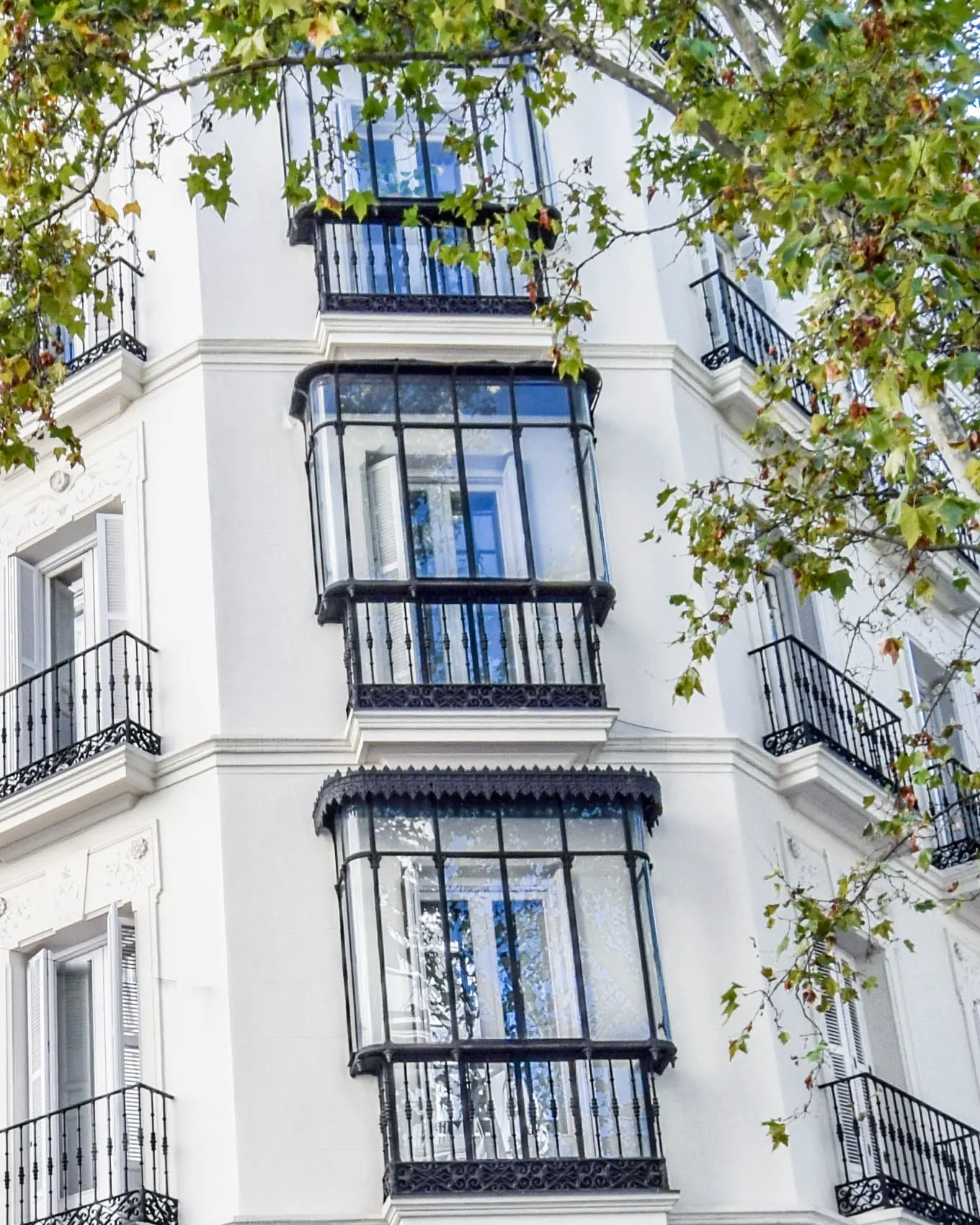
All six homes in our current selection are in three neighbourhoods: the Barrio de Salamanca, Chamberí and Almagro. They have a great deal in common. They are central, a few minutes’ walk from one another, and many of their buildings are apartment blocks from the late nineteenth and early twentieth centuries, with high ceilings, wrought-iron balconies and generous entrance halls.
But each has its own way of life. This is not a price guide or a ranking: it is what is worth knowing about each neighbourhood before you decide where to look.
A shared origin: the Ensanche
All three grew out of the same plan. In 1860 Madrid approved its Ensanche, or extension, designed by the engineer Carlos María de Castro, which took the city beyond its old boundary wall with a grid of straight streets and regular blocks.
Hence what they share: orderly streets, buildings of similar height and a type of home designed for the well-to-do of the day, with spacious rooms, high ceilings and street-facing façades. The differences lie in what happened to each one afterwards.
The Barrio de Salamanca: the perfect grid
This is the Ensanche at its purest, and it takes its name from its great developer, the Marquis of Salamanca. Its streets meet at right angles and are easy to find your way around: Serrano, Claudio Coello, Lagasca, Velázquez and Núñez de Balboa run one way; Jorge Juan, Goya, Ayala and José Ortega y Gasset the other.
It is the grandest and the most commercial of the three. Serrano and José Ortega y Gasset are home to the major fashion houses; the Mercado de la Paz, on Calle de Ayala, is still a neighbourhood market, and El Retiro is a short walk away.
In the property market its areas are spoken of separately. Recoletos, by the paseo of the same name and a step from the Retiro, has mansions and some of the city’s most stately apartment buildings. Castellana runs along the Paseo de la Castellana. Lista and Goya, further east, combine the same architecture with more of a neighbourhood feel.
In the current selectionVillanuevaOrtega y GassetGeneral PardiñasClaudio Coello
Chamberí: the Madrid of squares
Chamberí is the Ensanche that became a neighbourhood. It has the same orderly layout but lives more inwardly: in its squares, such as Plaza de Olavide or Plaza de Chamberí, in its food markets and in streets of long-established local shops.
It is a very residential district, with families, schools and a life of bars and restaurants whose best-known address is Calle de Ponzano. People who live here tend to do almost everything on foot.
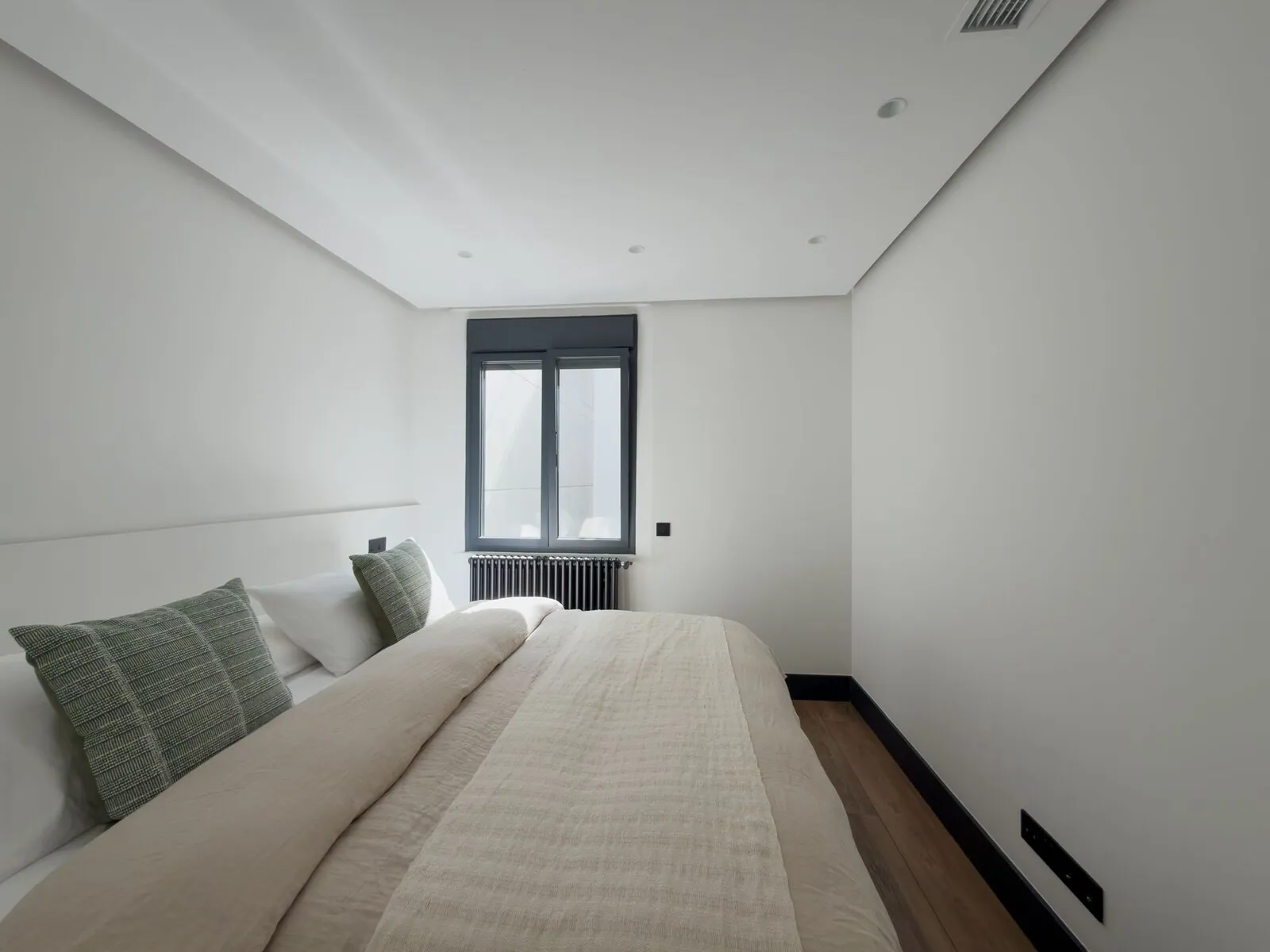
Alongside the Ensanche buildings stand others from different periods of the twentieth century, so here it pays to look at each building especially closely: how it was built, its condition and what the community has planned.
In the current selectionPonzano
Almagro: calm beside the Castellana
Administratively, Almagro is one of the neighbourhoods of the Chamberí district, but the market treats it separately, and with good reason. It is an area of mansions, diplomatic missions and quiet streets: Zurbano, Fortuny, Monte Esquinza and Calle de Almagro itself.
It has fewer shops than Salamanca and less bustle than the rest of Chamberí, which is exactly what those who choose it are after: quiet, handsome buildings and the Castellana close at hand. Alonso Martínez and Colón are a few minutes’ walk away.
In the current selectionGénova
Choosing a neighbourhood has less to do with the address than with how you want an ordinary Tuesday to feel.
At a glance
| Neighbourhood | Character | Streets to walk before deciding | In the selection |
|---|---|---|---|
| Salamanca | Grand and commercial, on a grid | Serrano, Velázquez, Jorge Juan, Lagasca | Villanueva, Ortega y Gasset, General Pardiñas and Claudio Coello |
| Chamberí | Residential, with squares and markets | Ponzano, Eloy Gonzalo, Plaza de Olavide | Ponzano |
| Almagro | Quiet, with mansions | Zurbano, Fortuny, Monte Esquinza | Génova |
How to choose
The choice is as much about life as about investment. Before viewing homes, it is worth walking all three neighbourhoods on a weekday, at the times you would be going about your life: in the morning, at school pick-up, at dinner time. What you notice on those walks tells you more than any listing.
If the home is also an investment (somewhere to spend a few months a year and let for the rest, for instance), it also matters how each neighbourhood lets, and to whom. In areas like these, rental yields tend to be more modest than elsewhere in Madrid: those who choose them are looking, above all, for stability and to protect their wealth.
Then comes the analysis, house by house: the building, the floor, the light, the community and the price. That is where a neighbourhood that seemed perfect may not suit a particular home, and vice versa.
If you are deciding where to look, we can help you narrow it down before you travel, based on what you are looking for and what is available, including off-market.